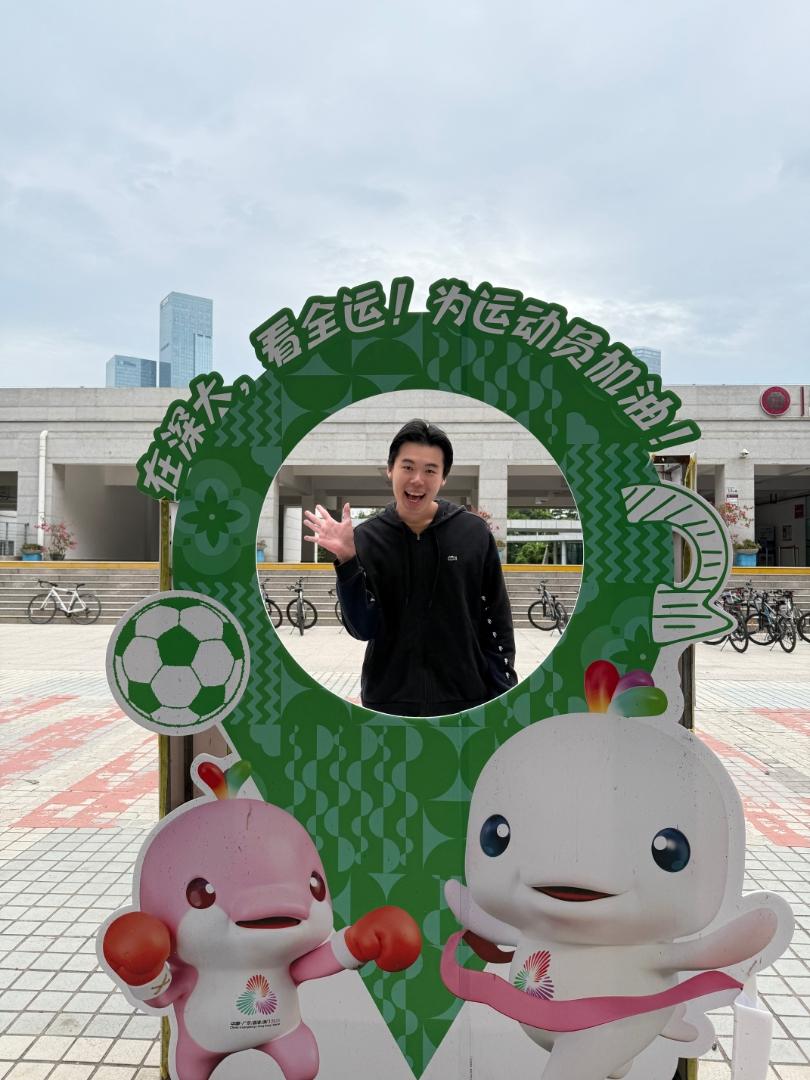
On the Yuehai Campus of Shenzhen University, the pinkish-purple blossoms of the silk floss trees are still in full bloom. As early autumn settles over Shenzhen, the summer heat is slowly retreating—yet Tan Jian Hong, a sophomore international student from Malaysia, still finds it quite hot.
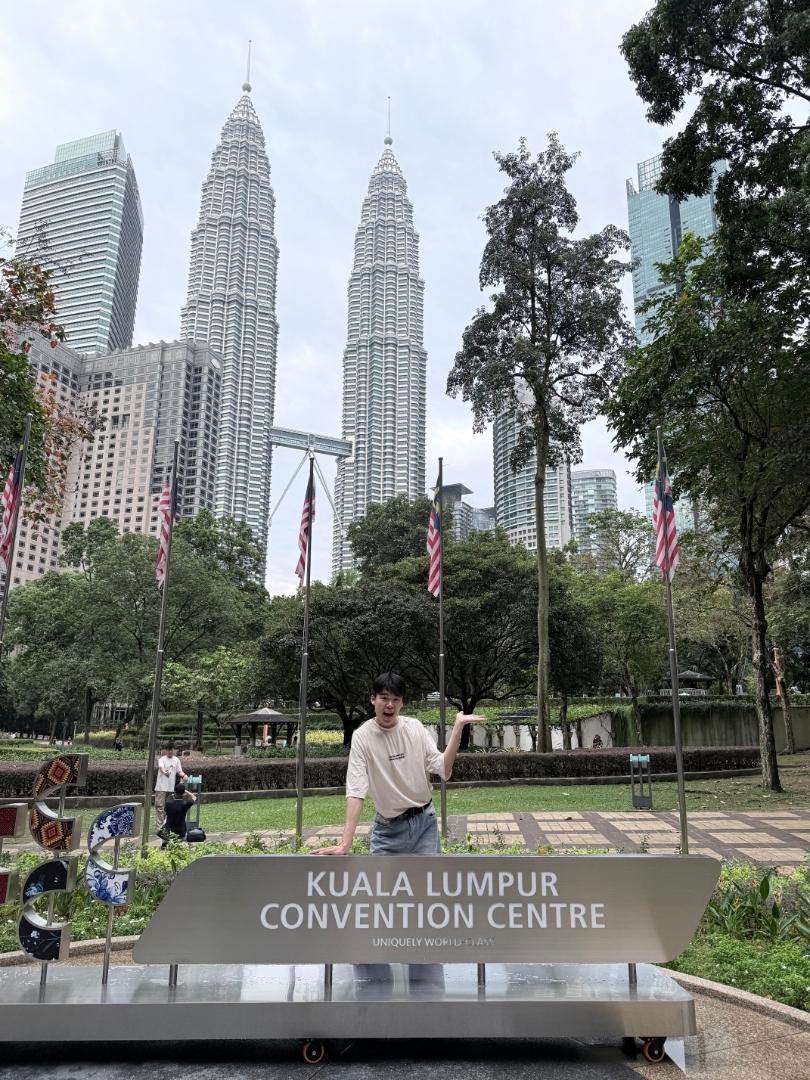
Malaysia is summer all year round. When he decided to study in China, Tan originally wanted to go somewhere with four distinct seasons, but he ultimately ended up in Shenzhen, a city with "long summers and short winters." Tan once likened himself to "a walking punctuation mark," describing his past self as "a question mark searching for a sentence." Now, over a year later, he is slowly turning that "question mark" into a "full stop" that marks the beginning of his own brilliant life.
From a Question Mark to a Shenzhen Scholar
Tan is a Malaysian Chinese whose ancestral home is Quanzhou, Fujian province. He has an older sister and a younger brother. In high school in Malaysia, Tan had little interest in science, yet he was assigned to the science stream. It made him doubt himself and lose his sense of direction. He later wrote that, at that time, he was "a giant question mark searching for a sentence."
At 17, his perspective on life began to shift thanks to his older sister. That year, she successfully applied to study at Chengdu University in China all on her own. Afterwards, she would frequently share snippets of her daily life in China, from the scenery she saw to the food she tasted.
For the first time, these unfamiliar landscapes, foods, and climates struck a chord with him, planting the seed for his studies abroad.
After graduating from high school at 18, Tan entered the workforce. He first worked as a warehouse keeper at a motor oil depot, tasked with loading and unloading heavy goods weighing anywhere from 12 kg to 54 kg. During this time, he gradually realized that without a degree or a solid skill set, his future path would only grow narrower. It was there that he made a pact with a friend: "We must study hard in university."
From graduating high school to entering Shenzhen University, Tan took a longer route than his peers. He worked for a year, completed a diploma program, and then worked part-time at a fast-food restaurant for another year after graduating from the diploma program.
In late 2024, through his sister's introduction, Tan became a morning shift Mandarin teacher at a tuition center. His students were mostly the children of migrant workers from countries like Myanmar and Pakistan. Many of the parents expressed a shared sentiment to him: China is developing rapidly, and they hope their children can learn Chinese well to have more choices in the future.
The longing for the future in the eyes of these parents and children was like an "ellipsis," which further strengthened Tan's resolve: studying in China might help more children like them write beautiful sentences in their own lives.
Thus, Tan set his sights on Shenzhen. In the autumn of 2025, at the age of 22, he was successfully admitted to the School of Media and Communication at Shenzhen University, majoring in Network and New Media.
Where Modernity Meets Tradition in Shenzhen
Tan had actually visited Shenzhen with his family in late 2023. During that 7-day trip, they spent two days in the city. A highly developed subway system and convenient transportation left a lasting first impression on him.
When he enrolled in 2025, his first impression of the campus was "huge, hot, and beautiful." To this day, he still gets lost and takes wrong turns in the sprawling, building-lined Yuehai Campus. Due to differences in his understanding of Chinese, he sometimes "gets lost" in his studies as well. "I will catch up after class, looking up and trying to understand the words the teacher said in class that I didn't grasp," Tan says.
The city's technological vibe has also transformed his way of studying and living. When creating new media content, he uses AI to assist with script generation and video editing. The smart access control, self-service printing, and online administrative systems on campus have all shown him the convenience brought by technology. What impressed him the most, however, is the drone food delivery in Shenzhen. Looking up to see a drone carrying a meal fly over the rooftops and land steadily in the drop-off locker still fills him with wonder.
This October, Tan was invited to participate in Shenzhen's "Intangible Cultural Heritage International Apprentice" experience. He visited the Shangchuan Huangliansheng Lion Dance Troupe in Bao'an and, under the guidance of Huang Zhihui, a municipal-level inheritor of Shenzhen's intangible cultural heritage and the fourth-generation inheritor of the troupe, he experienced the national intangible cultural heritage of Shangchuan Huangliansheng lion dance.
In Malaysia, the lion dance is a well-known cultural symbol. But for Tan, truly maintaining a stable horse stance, lifting the heavy lion head, and learning to blink, swing the head, and step to the rhythm of the drums was an entirely new challenge.
"I could only hold the horse stance for a few minutes before I couldn't take it anymore." This experience gave Tan a deeper admiration for the immense effort behind the lion dance. To Huang Zhihui, the arrival of international students provides an additional channel for international exchange for this intangible cultural heritage. For Tan, it was a special cultural connection between China and Malaysia.
Sharing the same cultural roots, this tradition has evolved and blossomed differently in both countries.
Writing His Own Story in Shenzhen
During his year and a half at Shenzhen University, Tan has learned to write down his observations of life. In his Modern and Contemporary Chinese Literature class, he wrote his first prose piece, A Walking Punctuation Mark, using punctuation to describe life: the confusion of youth is a question mark, the hope in the children's eyes is an ellipsis, and every day in Shenzhen is putting pen to paper for his own sentence.
In Tan's heart, Mandarin is a sacred presence. He grew up in a Mandarin-speaking family environment. "My mother is Hakka, and she and my grandmother speak Hakka to us. And since I grew up watching TVB dramas, I can understand Cantonese too." Tan proudly shared his family's multilingual environment. "My dad used to speak Mandarin, but after I went to university, he switched to speaking Hokkien, and he often reminds us, 'If you don't speak it, it will be lost.'"
Tan also shared a delightful surprise about his ancestry. Last year, his cousin visited relatives in Quanzhou and saw his name in the family genealogy, a memory that remains vivid to this day. "I never expected my name to appear in the genealogy," he says. It made him feel the profound meaning of inheritance even more. "These are the 'roots' that must never be severed."
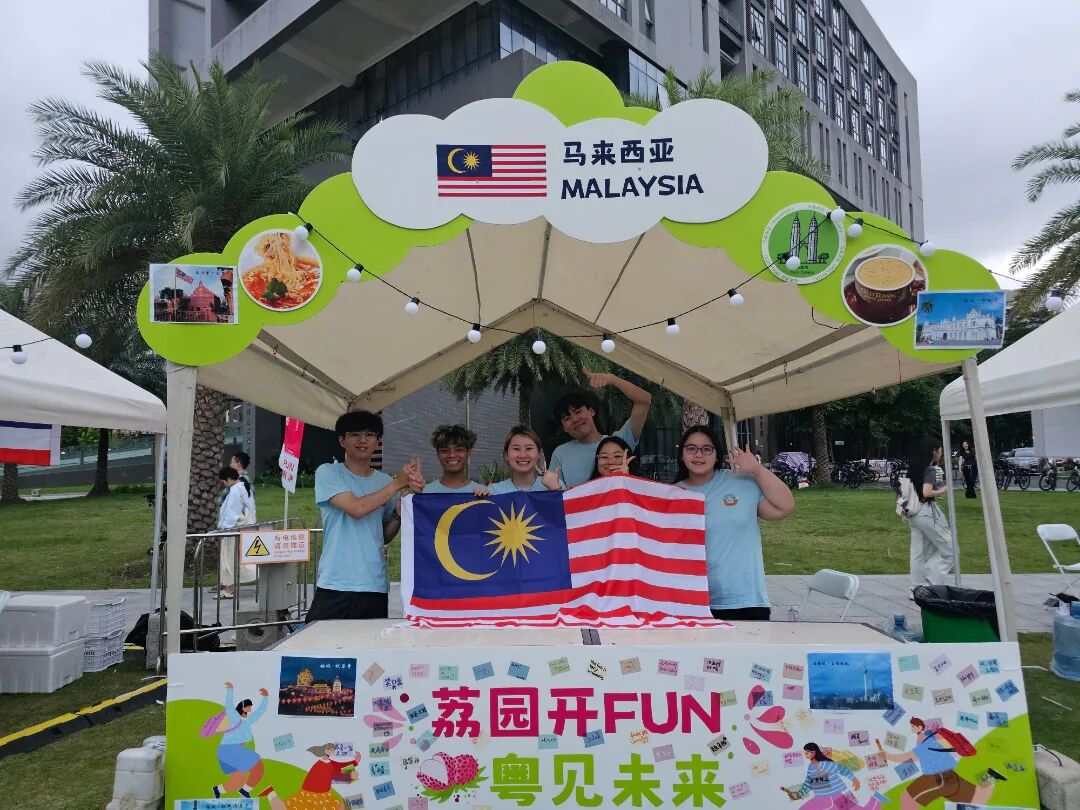
In his eyes, language is a continuous thread connecting him to his ancestors. As a Network and New Media major, he shoots short videos in his spare time to document his daily life in Shenzhen. He also introduces modern China to his friends and family in Malaysia, acting as a cultural communicator between the two nations.
As the autumn breeze picks up, the petals of the silk floss trees fall to the ground, landing on every step Tan has taken. Shenzhen may not be the "place with four distinct seasons" he had imagined, but it has offered him a different kind of harvest: an open campus, cutting-edge technology, and traditional culture taking root in this dynamic land... At the same time, Shenzhen’s open and inclusive spirit has embraced his initial "question mark," helping him write the sentences of his life with grounding and vibrancy.
As Tan himself wrote: "Shenzhen is hot, but the breeze here fans the flames of my blooming youth. With a myriad of colors and firm confidence, I stand on this land, smiling as I welcome the full stop of my own brilliant life."