During the APEC Economic Leaders' Meeting in Shenzhen, several scholars from Shenzhen University participated in related forums and media interviews, discussing topics such as industrial innovation, Asia-Pacific cooperation, urban governance, and international communication. A common question they explored was how Shenzhen could leverage its hosting of the meeting to showcase its development experience and turn the meeting's outcomes into long-term drivers of regional cooperation and urban development.
Industrial innovation and urban openness
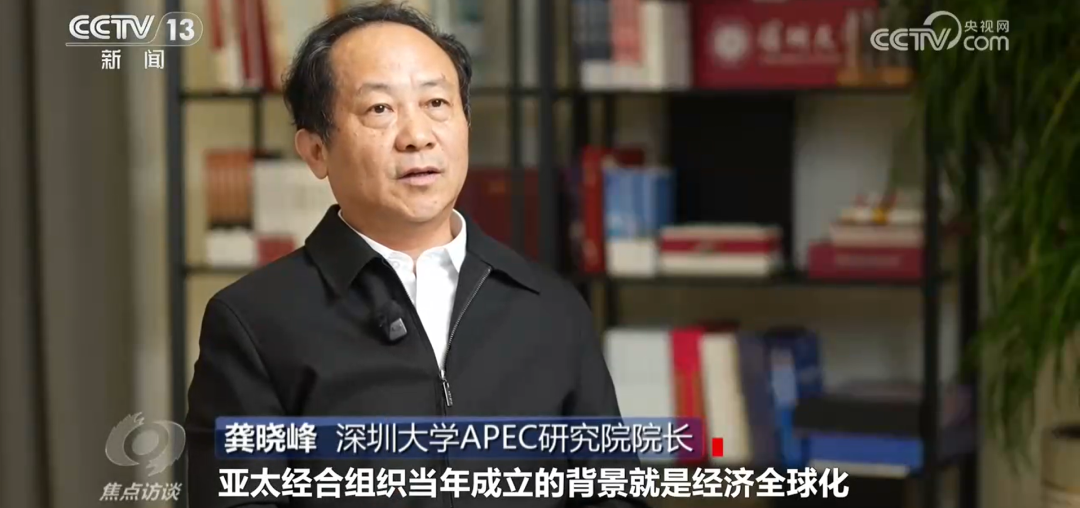
Gong Xiaofeng, Dean of the Shenzhen University APEC Research Institute, was interviewed by media outlets including CCTV, Phoenix TV, and Shenzhen Special Zone Daily, offering insights into the three priority areas of this year's meeting: openness, innovation, and cooperation. He believes that these priorities address challenges such as the shift in regional growth drivers and the lack of certainty surrounding development. He added that China's having hosted APEC three times reflects its continued commitment to expanding openness.
Gong noted that Shenzhen has upgraded from processing and manufacturing to R&D and advanced manufacturing, while its market mechanisms, business environment, and urban governance have improved in parallel. This provides a concrete example for understanding how China can stimulate business vitality and drive technological progress. He also noted that China is both a major seller's market and an important buyer's market, and that promoting balanced trade is an important part of the adjustment of China's foreign trade strategy.
Dai Yonghong, Dean of the College of International Studies and Dean of the Institute of Area and International Communication Studies at Shenzhen University, noted that the 2026 APEC "China Year" had already generated outcomes through more than 300 meetings. He said Shenzhen could tell China's story by focusing on practical aspects of urban operations, such as upgrading port facilities and improving multilingual services. The effects of trade facilitation and the spillover of rules would also extend to employment, consumption, and urban life.
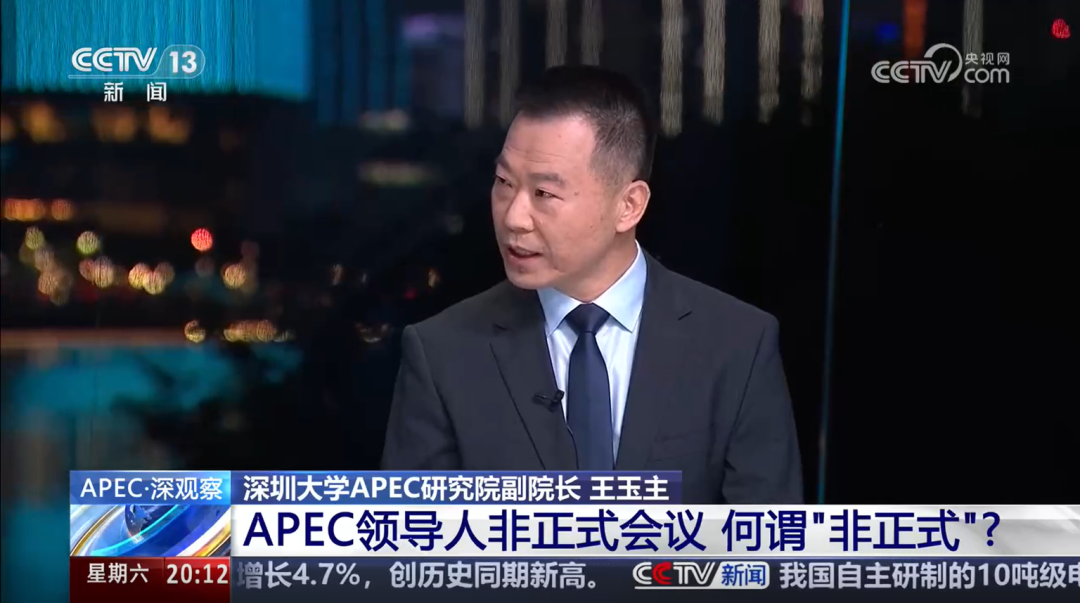
Wang Yuzhu, Director of the ASEAN Greater Bay Area Research Institute and Deputy Dean of the APEC Research Institute at Shenzhen University, believes that hosting the meeting requires ensuring smooth, safe, and efficient operations while also developing distinctive green, technological, and cultural characteristics. The outcomes of the meeting should ultimately be translated into tangible development benefits for local residents.
Regional cooperation requires actionable frameworks
Wang Yuzhu explained the APEC informal consultation mechanism on a CCTV program and outlined the significance of the meeting to Shenzhen for media in China and abroad. He believes that Shenzhen should not only showcase its own development achievements but also serve as a window for the world to understand Chinese modernization and openness and cooperation in the Asia-Pacific region.
Regarding the meeting's legacy, he proposed turning the Putrajaya Vision from a consensus document into an actionable framework for cooperation, so that exchanges in Shenzhen as the host city could generate lasting outcomes for regional cooperation.
Urban governance and digital technology
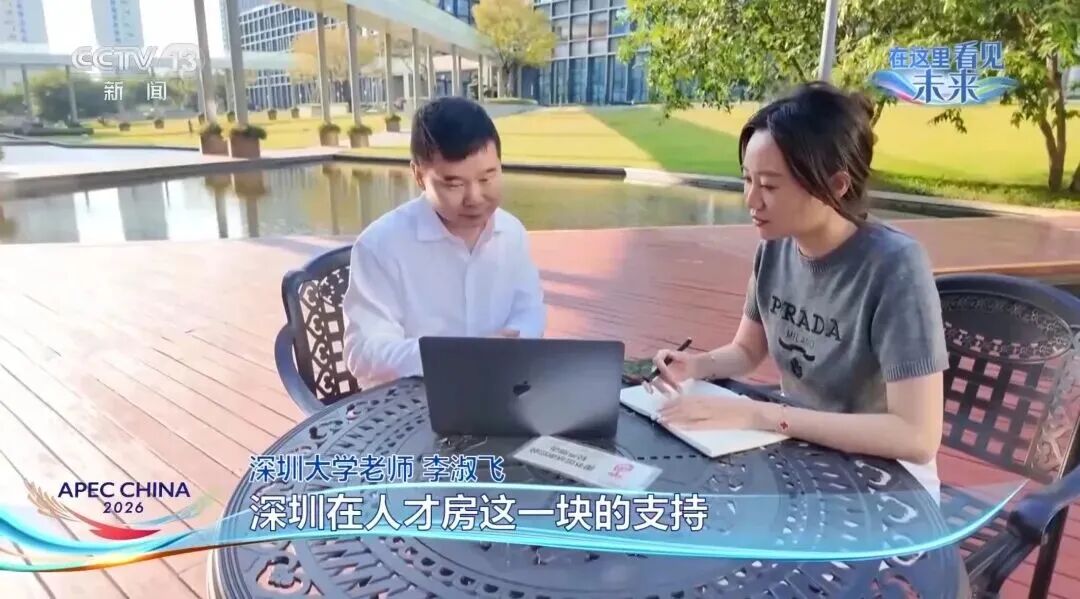
On urban governance, Li Shufei, Executive Director of the ASEAN Greater Bay Area Research Institute, Shenzhen University, approached the topic from the perspective of housing security. He believes that stable housing conditions help attract and retain talent and offer an example of how cities can foster inclusive talent development.
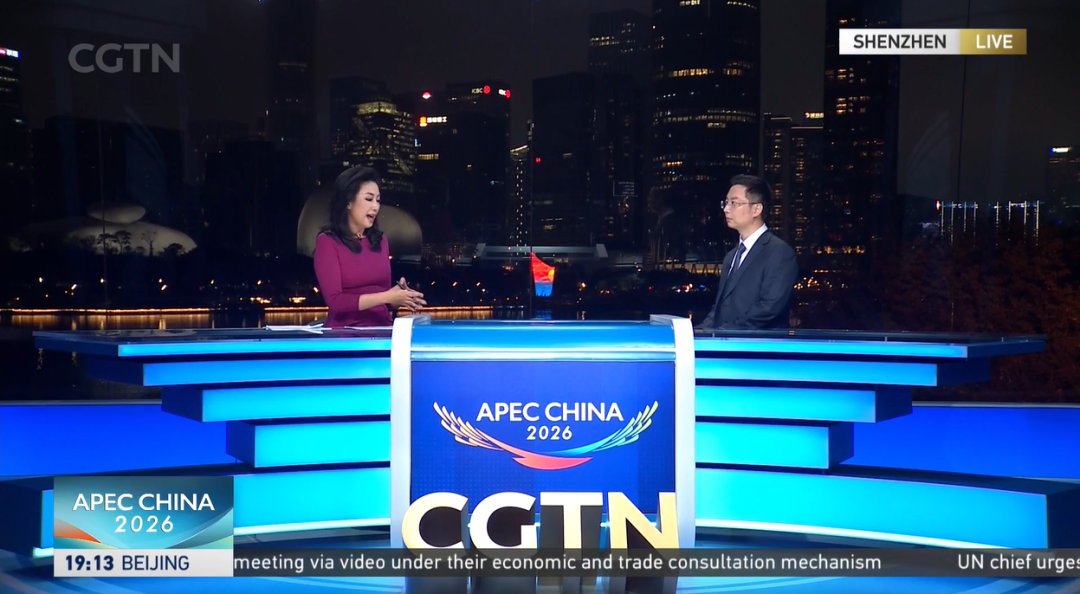
Fu Yang, Deputy Director of the Research Institute, said during a CGTN live broadcast that Asia-Pacific economies could establish joint research and industrial platforms and use digital technologies such as artificial intelligence to support small and medium enterprises. The Greater Bay Area's strengths in supply chains and innovation complement ASEAN's markets and young workforce.
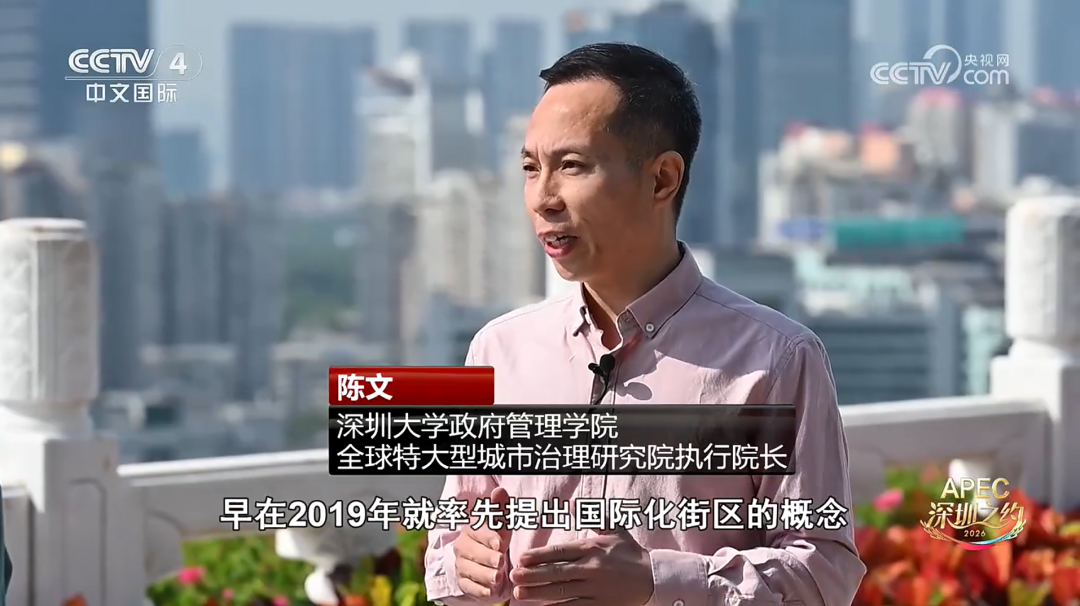
Chen Wen, Executive Dean of the Institute of Global Mega-City Governance, Shenzhen University, explained that Shenzhen introduced the concept of internationalized neighborhoods in 2019 and has gradually developed a city-wide network of such neighborhoods, reflecting the openness of a city shaped by migration. Wang Tongchen, a researcher at the Institute for Global Communication Studies, noted that the value of "AI + Smart City" lies in shifting urban management from passive response to proactive prediction.
At the Asia-Pacific Media Forum Shenzhen Sub-forum, Guo Renzhong, Dean of the Research Institute for Smart Cities, Shenzhen University, said that a smart city is not simply an accumulation of technological tools. Instead, it achieves "digital and intelligent adaptation" through urban sensing, digital twins, and intelligent decision-making, ultimately serving better governance, business development, and public well-being.
International communication and youth exchange
Chao Naipeng, Vice President of Shenzhen University, analyzed Shenzhen's cultural development from five perspectives: nationwide reading, artistic creation, urban civilization, cultural industries, and international communication. He believes that Shenzhen's development is reflected not only in economic growth but also in the ongoing development of its cultural ecosystem.
At the "2026 WiseDemo Campaign Asia-Pacific Youth Shenzhen Dialogue," Dai Yonghong discussed the role of the ocean in exchanges between civilizations and encouraged young people to participate in Asia-Pacific cooperation through practical exchanges. The "Asia-Pacific Think Tank Forum Shenzhen," which opened on October 12, was hosted by Shenzhen University to provide a platform for dialogue and cooperation among Asia-Pacific think tanks.